 YAMADA ONSEN · NAGANO
YAMADA ONSEN · NAGANO
YAMADA ONSEN · NAGANO
TOJI.ba Journal — Takayama Wine
2026.09.04
This journal is about the grapes and wine of Takayama Village in Nagano. It sets out why the village grows wine grapes, the conditions of the land, and the varieties raised here, all drawn from public records.
The village lies in the north of Nagano, the prefecture that grows more wine grapes than any other in Japan. Rainfall is low, the height keeps the air cool, and the gap between day and night temperatures is wide.
The TOJI.ba MATSUKAWAKAN is a nine-room hot spring ryokan in this village. After a day among the wine and grapes, you can end it in the free-flowing baths and saunas.
The village makes a strong case for grapes. Takayama says it lies in the north of Nagano, the prefecture that grows more wine grapes than any other in Japan, and several conditions come together here.
One is the lack of rain. Takayama says rainfall is low, and the height keeps the air cool, with a wide gap between day and night temperatures.
The land helps too. West-facing slopes give long hours of sun, and the gravelly soil drains well, according to the village.
Takayama grows grapes for both white and red wine, the village says.
For white wine, the mainstays are Chardonnay and Sauvignon Blanc. For red, they are Merlot and Cabernet Sauvignon, according to the village.
Alongside these, the village also grows Barbera, Riesling and Pinot Noir. That is a wide range for a single village.
Grapes here are more than wine; they are one of the village's specialties. The Shinshu Takayama tourism association lists apples and grapes, and wine pressed from grapes grown in the village, among its produce.
Beside them are mountain vegetables, bamboo shoots and wild mushrooms. The association also lists vegetables and rice from local farms, buckwheat noodles and oyaki dumplings, hot spring buns and sake.
Among the apples is a low-spray one, the Shinshu Takayama Sawayaka apple. The village says pheromone-based pest control began in the spring of 1991, and the name was set in the summer of 1994 once the chemical load had come down.
The ryokan takes its ingredients seriously too. You can read about the meat, rice and dashi at MATSUKAWAKAN in Meat, rice and dashi.
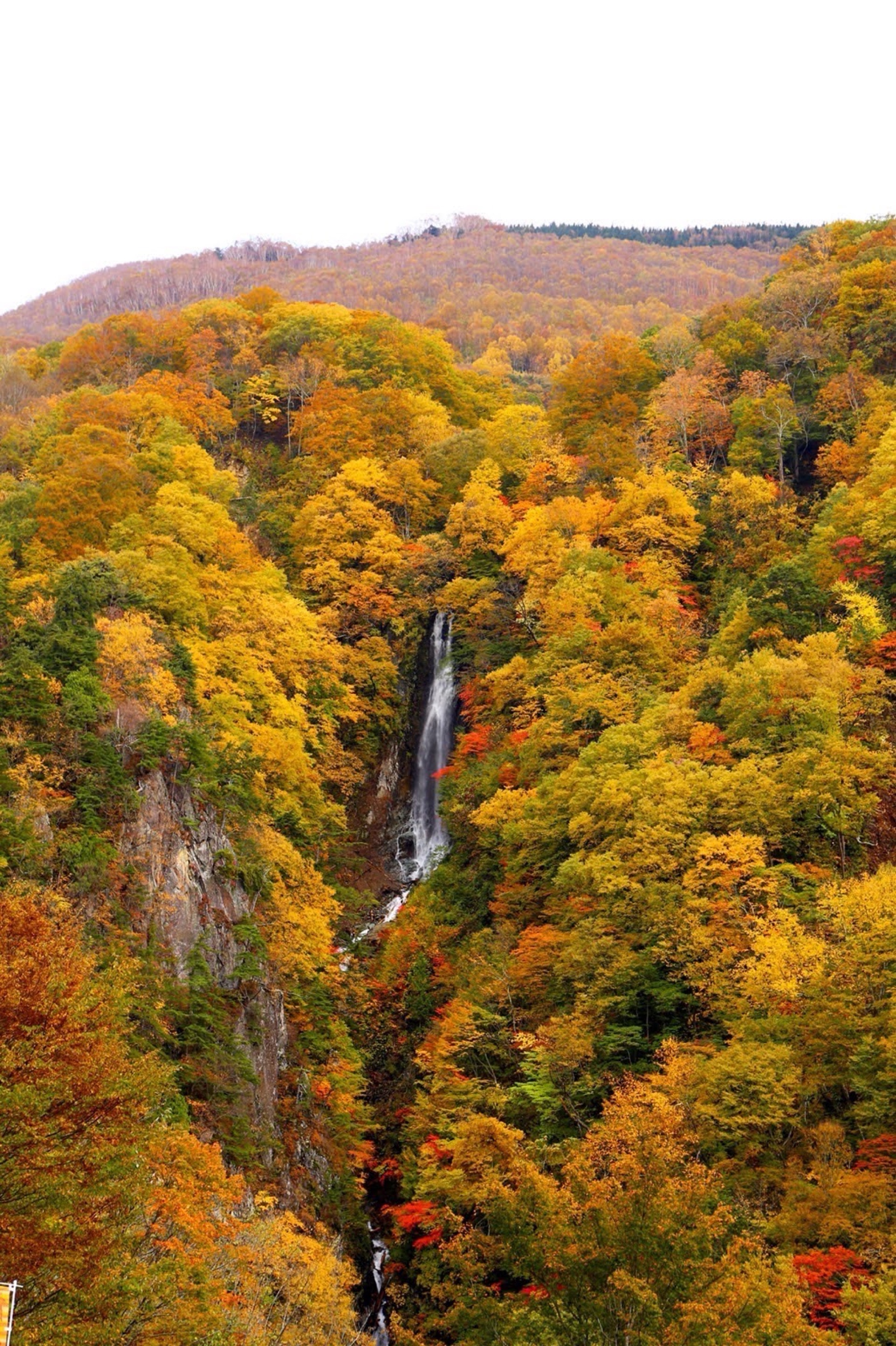
It is worth seeing how far the land stretches. The village says it covers 98.56 square kilometres, about 17.8 kilometres east to west and 10.7 kilometres north to south.
Roughly 85 per cent of that is forest and open ground. The whole village sits inside the Joshinetsu Kogen National Park.
The village is also steep. The tourism association puts about 1,600 metres between the lowest and highest points of the village.
After a day among the wine and grapes, you can warm up in the baths at MATSUKAWAKAN. It is a nine-room hot spring ryokan with a free-flowing indoor bath, a private open-air bath, two sauna buildings and an irori kaiseki dinner.
You can see the kaiseki dinner on the Meals page. Day-use bathing runs from 11:00 to 20:00, with last entry at 19:30, at 650 yen per person (tax included), and no reservation is needed. Prices are subject to change; please check before you visit.
| Day-use bathing hours | 11:00-20:00 (last entry 19:30) |
|---|---|
| Day-use price | 650 yen per person (tax included) |
| Semi-private rest room | 11:00-16:00 |
| Check-in / check-out | 15:00 / 10:00 |
Day-use bathers can use a semi-private rest room from 11:00 to 16:00. To pair it with lunch, see Day-use onsen with lunch.
Guests with tattoos are welcome in all of the baths. Even on a day visit, you can take your time in the water.
Nagano Station is the gateway to the village and the ryokan. MATSUKAWAKAN is about 40 minutes by car from Nagano Station.
A free shuttle bus runs between Nagano Station and MATSUKAWAKAN. If you drive, Yamada Onsen has a free village car park, a short walk from the ryokan; for details, see Access.
To plan a day around the village's wine and grapes, see our itinerary. Use A Takayama Village itinerary as you map out the trip.
After the wine and grapes of the village, unwind in the free-flowing baths and saunas at MATSUKAWAKAN.
Reservation
Takayama lies in northern Nagano, Japan's top wine-grape prefecture.
Make MATSUKAWAKAN your base for a trip around the village's grapes and wine.